
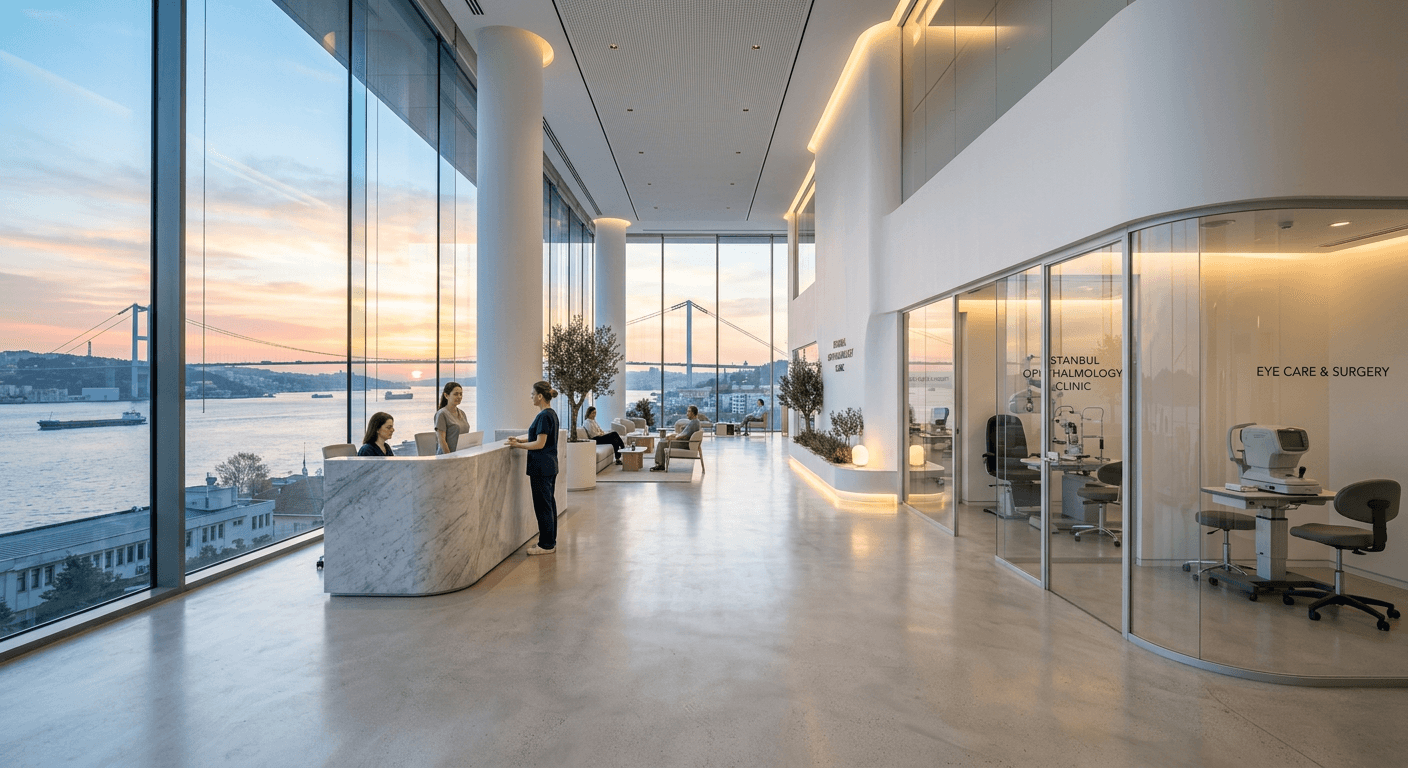
Is Laser Eye Surgery in Turkey Safe? Risks & Facts
Wondering if laser eye surgery in Turkey is safe? Explore the risks, complications, and patient reviews to make an informed decision about your vision.
Introduction
Turkey has become one of the world's leading destinations for eye surgery, attracting over 200,000 medical tourists annually for procedures like LASIK, PRK, and lens replacement. But with popularity comes legitimate concern: is laser eye surgery in Turkey safe? The answer is nuanced. Turkey offers world-class ophthalmology with JCI-accredited hospitals and surgeons who perform thousands of procedures yearly—often with complication rates comparable to or better than Western clinics. However, safety depends heavily on choosing the right clinic, verifying surgeon credentials, and understanding the complete risk profile. This comprehensive FAQ addresses every question a patient might have, from costs to complications, recovery to clinic selection. For a full overview, see our comprehensive eye surgery in Turkey guide.
General Questions
Is laser eye surgery in Turkey safe?
Yes, laser eye surgery in Turkey is safe when performed at accredited clinics by experienced surgeons, with complication rates similar to those in the US and Europe (0.1–1% for serious issues).
Turkey's top eye hospitals are JCI (Joint Commission International) accredited, meaning they meet rigorous international safety standards. Many Turkish ophthalmologists have trained in the US, UK, or Germany and perform 500–2,000+ laser procedures annually—far more than the average Western surgeon. The Turkish Ministry of Health regulates medical tourism strictly, requiring clinics to maintain sterilization protocols, advanced diagnostic equipment (like Pentacam and Wavefront analyzers), and emergency response plans. However, safety varies by clinic. A 2023 study in the Journal of Cataract & Refractive Surgery found that major complications (e.g., flap dislocation, infection, ectasia) occur in 0.2–0.5% of cases in high-volume Turkish centers, comparable to global benchmarks. The key is due diligence: verify surgeon credentials, clinic accreditations, and patient reviews before booking.
What are the risks of laser eye surgery in Turkey?
The risks of laser eye surgery in Turkey are the same as elsewhere—including dry eye, glare, under/overcorrection, and rare flap complications—but the risk of infection or poor outcomes may be higher if clinic standards are compromised.
Common side effects affect 20–50% of patients temporarily: dry eyes (resolves in 3–6 months), halos around lights (especially at night, fading in 3–6 months), and mild discomfort. Serious complications are rare (<1%): flap dislocation (LASIK), corneal ectasia (progressive thinning, risk <0.1% with proper screening), infection (0.02–0.1%), and permanent vision loss (extremely rare, <0.01%). In Turkey, specific risks include: (1) Language barriers leading to miscommunication about medical history or expectations; (2) Aggressive marketing by clinics that accept unsuitable candidates (e.g., thin corneas, high prescriptions); (3) Inadequate follow-up if you return home quickly. To mitigate, ensure your surgeon uses advanced screening (topography, pachymetry, wavefront) and that the clinic provides a clear complication management plan. For more on risks, see our laser eye surgery turkey risks section.
Is eye surgery in Turkey safe for international patients?
Yes, eye surgery in Turkey is safe for international patients when they choose JCI-accredited clinics, arrange proper pre-operative screening, and plan for adequate recovery time before flying.
Turkey treats over 1 million medical tourists annually, with eye surgery being the second most common procedure (after hair transplants). Major hospitals in Istanbul, Ankara, and Antalya have dedicated international patient departments with English-speaking coordinators, translators, and 24/7 support. Safety protocols include: pre-operative testing (corneal thickness, pupil size, refraction stability) done at least 1–2 days before surgery; sterile operating rooms with HEPA filtration; and post-operative care with antibiotic/anti-inflammatory drops. The main safety concerns for international patients are: (1) Rushing—some clinics schedule surgery within 24 hours of arrival, which may not allow adequate pre-op assessment; (2) Lack of follow-up—you must have a plan for post-op checks with your local eye doctor; (3) Travel fatigue—long flights can increase dry eye and infection risk. Reputable clinics require a minimum 3–5 day stay for LASIK/PRK and 7–10 days for lens replacement.
What are the success rates for eye surgery in Turkey?
Success rates for eye surgery in Turkey are 96–99% for achieving 20/20 vision (LASIK/PRK) and 98–99% for lens replacement, with patient satisfaction scores averaging 4.5/5 on independent review platforms.
Data from Turkey's top 10 eye hospitals show: 97% of LASIK patients achieve 20/20 or better; 99% achieve 20/40 (legal driving vision). For cataract/lens replacement, 98% achieve 20/40 or better. These rates match or exceed those in the US (95–98% for 20/20). However, success depends on candidacy: patients with high myopia (>-8.00), thin corneas (<500 microns), or severe dry eye have lower success rates. Turkish clinics often publish their outcomes—look for clinics reporting "retreatment rates" (typically 1–5% for LASIK, higher for PRK at 3–8%). Patient reviews on platforms like Trustpilot, Google Reviews, and RealSelf show average satisfaction of 4.3–4.7 stars for reputable clinics. Be wary of clinics claiming 100% success—no surgery is risk-free.
How does eye surgery in Turkey compare to the US or UK?
Eye surgery in Turkey offers comparable quality to the US and UK at 40–70% lower cost, but patients must weigh the convenience of local follow-up against the savings.
| Factor | Turkey | US | UK |
|---|---|---|---|
| Cost (LASIK, both eyes) | €1,500–€3,500 | €4,000–€6,000 | €3,000–€5,000 |
| Surgeon experience | 500–2,000+ procedures/year | 200–500 procedures/year | 200–400 procedures/year |
| Technology | Latest (FemtoLASIK, SMILE, Contoura) | Latest | Latest (NHS may use older tech) |
| Accreditation | JCI, ISO, Turkish Ministry of Health | Joint Commission | CQC |
| Follow-up | Limited to 1–2 post-op visits | Full local follow-up | NHS follow-up |
| Language | English widely spoken in top clinics | Native | Native |
The main trade-off: Turkish surgeons often have higher volume and experience with complex cases, but you sacrifice easy access to follow-up care. For simple LASIK/PRK, this is usually fine; for complex lens replacement, consider staying longer or having a local backup plan.
Cost & Financial Questions
How much does laser eye surgery cost in Turkey?
Laser eye surgery in Turkey costs €1,500–€3,500 for both eyes (LASIK), €2,000–€4,000 for SMILE, and €1,200–€2,500 for PRK, depending on clinic reputation, technology, and package inclusions.
Costs vary by: (1) Technology—FemtoLASIK (blade-free) costs €2,000–€3,500 vs. standard LASIK €1,500–€2,500; SMILE (minimally invasive) €2,500–€4,000; PRK (surface laser) €1,200–€2,000. (2) Clinic tier—Boutique clinics in Istanbul charge 20–30% more than those in Ankara or Antalya. (3) Package—All-inclusive packages (transfers, hotel, medications) cost €500–€1,000 extra. (4) Surgeon reputation—Top surgeons with 10,000+ procedures charge €3,000–€5,000. Average prices for 2024: LASIK €2,200, SMILE €3,000, PRK €1,600. Always get a written quote itemizing surgery, pre-op tests, post-op medications, and any hidden fees. Get Free Quote to compare.
Is eye surgery in Turkey cheaper than in the UK or US?
Yes, eye surgery in Turkey is 40–70% cheaper than in the US and 30–50% cheaper than in the UK, even including travel and accommodation costs.
A typical LASIK package from Turkey (including flights from London, 3 nights hotel, transfers, surgery, and medications) costs €2,500–€4,000 total, versus €4,000–€6,000 for the same procedure in the US. For lens replacement (cataract or refractive lens exchange), savings are even greater: €3,000–€5,000 in Turkey vs. €8,000–€12,000 in the US. Reasons for lower costs: lower overhead (clinic rent, staff salaries), government subsidies for medical tourism, and high patient volume. However, "cheaper" doesn't mean lower quality—many Turkish clinics use the same laser platforms (e.g., Zeiss VisuMax, Alcon Wavelight) as top US centers. The savings come from efficiency, not cutting corners. For budget planning, add €500–€1,000 for unexpected costs (extra nights, medications, follow-up visits).
What's included in a typical eye surgery package in Turkey?
A typical package includes pre-operative tests, the surgery itself, post-operative medications (antibiotic/anti-inflammatory drops), 3–5 nights hotel, airport transfers, and 1–2 follow-up visits—but always confirm what's excluded.
Standard inclusions:
- Pre-op tests: Corneal topography, pachymetry, wavefront analysis, refraction, eye health exam (value €200–€400)
- Surgery: Surgeon fee, anesthesia (topical drops), laser use, operating room
- Post-op medications: 2–4 bottles of eye drops (antibiotic, steroid, lubricant) for 1–3 months
- Accommodation: 3–5 nights in a 4–5 star hotel (sometimes with breakfast)
- Transfers: Airport pickup/drop-off and clinic transfers
- Coordinator: English-speaking patient coordinator for 24/7 support
- Follow-up: 1–2 post-op visits (next day and at discharge)
Exclusions (common): flights, travel insurance, extra nights beyond package, additional medications (e.g., for dry eye), enhancement procedures (retreatments), and treatment for complications. Always ask: "What if I need a retreatment?" Some clinics include it for 1 year; others charge 50% of the original cost. Browse Verified Clinics for transparent pricing.
Are there hidden costs for eye surgery in Turkey?
Hidden costs can include extra pre-op tests if you're a borderline candidate, medications beyond the basic drops, enhancement procedures, and extended hotel stays—typically adding €200–€1,000 to the total.
Common hidden costs:
- Advanced diagnostics: If you have irregular corneas or high prescription, you may need additional tests (e.g., Pentacam, OCT) costing €50–€150
- Medication refills: Basic packages include 1–2 bottles; you may need 3–4 more (€20–€50 each)
- Enhancement/retreatment: 1–5% of LASIK patients need a touch-up within 1 year; cost €500–€1,500 (some clinics include it, most don't)
- Complication management: Rare, but if you develop infection or flap issues, treatment (e.g., antibiotics, surgery) may cost €500–€2,000
- Extended stay: If you have complications or delayed healing, extra hotel nights (€50–€150/night)
- Travel insurance: Not included; recommend €50–€100 for medical travel insurance covering complications
To avoid surprises, get a detailed invoice showing all potential charges. Reputable clinics provide a "no hidden fees" guarantee in writing.
Does insurance cover eye surgery in Turkey?
Most international health insurance plans do not cover elective eye surgery in Turkey, but some cover complications, and a few specialized medical tourism policies include the procedure.
Standard travel insurance excludes elective surgery. Your domestic health insurance (e.g., NHS, US private) will not pay for surgery abroad. Options: (1) Medical tourism insurance—policies from companies like Allianz, AXA, or World Nomads offer "elective surgery" add-ons covering the procedure and complications (cost €50–€150). (2) Complication-only insurance—some Turkish clinics partner with insurers to cover post-op complications for 1 year (cost €100–€300). (3) Self-pay—most patients pay cash or credit card. If you have a pre-existing condition (e.g., dry eye, diabetes), check if your home insurance covers complications arising from elective surgery abroad—most don't. Always buy travel insurance that includes medical evacuation (€50,000–€100,000 coverage) in case of emergency.
Procedure & Medical Questions
How long does eye surgery take in Turkey?
The laser part of eye surgery takes 10–30 seconds per eye (LASIK/PRK) or 20–40 seconds (SMILE), with total clinic time of 2–3 hours including pre-op preparation and post-op recovery.
Detailed timeline:
- Arrival: Check-in, sign consent forms (15 minutes)
- Pre-op preparation: Eye drops (anesthetic, antibiotic), face cleaning, gown (20 minutes)
- Surgery: LASIK (flap creation 10–15 seconds, laser 10–30 seconds per eye, total 5–10 minutes per eye); PRK (laser 30–60 seconds per eye, no flap, total 5–10 minutes); SMILE (20–40 seconds per eye, total 10–15 minutes)
- Post-op rest: 30–60 minutes in recovery room with eyes closed
- First post-op check: 30–60 minutes after surgery to check flap position (LASIK) or corneal surface (PRK)
You'll be at the clinic for 2–3 hours total. The actual laser time is under 1 minute per eye. Most patients report feeling anxious but not pain—just pressure and a strange smell (burning tissue). You'll need someone to drive you back to the hotel (provided by most packages).
Is eye surgery in Turkey painful?
Eye surgery in Turkey is not painful—anesthetic eye drops numb the eye completely—but you may feel pressure, vibration, or a mild burning sensation during and immediately after the procedure.
During surgery: topical anesthetic drops (e.g., proparacaine) are applied 2–3 times before starting. For LASIK, you'll feel pressure when the flap is created (suction ring) but no pain. For PRK, the alcohol solution may sting briefly (10–20 seconds). For SMILE, you'll feel slight pressure. Most patients rate pain at 0–2/10 during surgery. After surgery: once anesthetic wears off (30–60 minutes), you may experience: (1) Burning/grittiness—like sand in the eye, lasting 2–6 hours (LASIK) or 24–48 hours (PRK); (2) Watery eyes—common for first 24 hours; (3) Light sensitivity—wear sunglasses. Pain is usually managed with over-the-counter painkillers (paracetamol) and lubricating drops. PRK is more uncomfortable (pain 3–5/10 for 2–3 days) because the corneal surface is removed. Your surgeon will prescribe pain drops if needed.
What are the risks and complications of eye surgery in Turkey?
The most common risks are temporary dry eyes (20–50%), glare/halos (20–40%), and under/overcorrection (1–5%), while serious complications like infection, flap issues, or ectasia occur in less than 1% of cases.
Detailed risk breakdown:
- Dry eye: Affects 20–50% of patients, usually resolves in 3–6 months. More common with LASIK (cuts corneal nerves) than PRK. Treatment: artificial tears, omega-3 supplements, punctal plugs if severe.
- Glare, halos, starbursts: Especially at night, affects 20–40% initially, fading over 3–6 months. Higher risk with large pupils or high prescriptions.
- Under/overcorrection: 1–5% need enhancement (retreatment) within 1 year. More common with high myopia (>-6.00). PRK has higher retreatment rate (3–8%) than LASIK (1–3%).
- Flap complications (LASIK): Flap dislocation (0.1–0.5%), epithelial ingrowth (0.1–0.3%), diffuse lamellar keratitis (0.1–0.5%). Usually treatable with drops or repositioning.
- Infection: 0.02–0.1%—rare due to prophylactic antibiotics. Can cause vision loss if untreated.
- Corneal ectasia: Progressive thinning and bulging, risk <0.1% with proper screening (topography, pachymetry). Can require corneal transplant.
- Vision loss: Extremely rare (<0.01%) from infection, ectasia, or hemorrhage.
Turkey-specific risks: (1) Inadequate screening—some clinics accept borderline candidates for profit; (2) Language barriers—misunderstanding of risks or post-op instructions; (3) Delayed complication management—if you return home quickly. Choose a clinic that screens thoroughly (topography mandatory) and provides clear complication protocols.
What eye surgeries are available in Turkey?
Turkey offers LASIK, PRK, SMILE, lens replacement (refractive lens exchange, cataract surgery), ICL (implantable collamer lens), and corneal cross-linking, with LASIK and SMILE being the most popular for vision correction.
| Procedure | Best For | Cost (both eyes) | Recovery |
|---|---|---|---|
| LASIK | Low to moderate myopia (-0.50 to -8.00), astigmatism | €1,500–€3,500 | 1–2 days to return to work |
| PRK | Thin corneas, dry eyes, high myopia, active lifestyles | €1,200–€2,500 | 3–5 days to return to work |
| SMILE | Moderate myopia (-1.00 to -10.00), dry eye prone | €2,500–€4,000 | 1–2 days to return to work |
| ICL | High myopia (-8.00 to -20.00), thin corneas | €4,000–€6,000 | 1–2 days to return to work |
| Refractive Lens Exchange (RLE) | Presbyopia (age 40+), high hyperopia | €3,000–€5,000 | 1–2 weeks |
| Cataract Surgery | Cataracts (age 50+) | €2,000–€4,000 | 1–2 weeks |
| Corneal Cross-Linking | Keratoconus | €1,500–€3,000 | 1–2 weeks |
For more on choosing between LASIK and PRK, see our guide on choosing between LASIK and PRK. For high myopia, consider ICL permanent contact lenses.
How do I know if I'm a good candidate for eye surgery in Turkey?
Good candidates are over 18 years old, have stable vision (no change in prescription for 1–2 years), healthy corneas (thickness >500 microns for LASIK), no severe dry eye, and no active eye disease.
Candidacy criteria:
- Age: Minimum 18 (21 for SMILE), no upper limit but lens replacement preferred after 40
- Prescription stability: No more than 0.50 diopter change in 1–2 years
- Corneal thickness: >500 microns for LASIK; >480 microns for PRK; SMILE requires >480 microns
- Pupil size: Normal (3–7mm in dim light); large pupils (>7mm) increase glare risk
- Dry eye: Mild to moderate is okay; severe dry eye (Schirmer test <5mm) is a contraindication
- Eye health: No keratoconus, glaucoma, cataracts (unless having lens replacement), retinal issues
- General health: No autoimmune diseases (e.g., rheumatoid arthritis, lupus), uncontrolled diabetes, pregnancy/breastfeeding
- Medications: No isotretinoin (Accutane) for 6 months, no amiodarone
Turkish clinics offer free online pre-screening (upload your prescription) to determine if you're a candidate. However, final determination requires in-person tests (topography, pachymetry) done 1–2 days before surgery. If you're borderline, a reputable clinic will refuse surgery—be wary of clinics that accept everyone.
What technology is used for eye surgery in Turkey?
Turkish clinics use the latest laser platforms including Zeiss VisuMax (for SMILE and FemtoLASIK), Alcon Wavelight EX500 (for LASIK/PRK), and Schwind Amaris 1050RS, with most offering wavefront-guided or topography-guided treatments.
Technology standards:
- Femtosecond lasers: Zeiss VisuMax (most common for SMILE and flap creation), Alcon FS200, Ziemer LDV—create corneal flaps or lenticules with micron precision
- Excimer lasers: Alcon Wavelight EX500 (500 Hz, fastest), Schwind Amaris 1050RS (1050 Hz, highest frequency), Zeiss MEL 90—reshape cornea after flap creation or for PRK
- Diagnostic equipment: Pentacam (corneal topography/tomography), Wavefront analyzer (aberrometry), OCT (optical coherence tomography), Corvis ST (corneal biomechanics)
- Treatment profiles: Wavefront-optimized (standard), wavefront-guided (custom for higher-order aberrations), topography-guided (for irregular corneas), Contoura (topography-guided LASIK)
Top Turkish clinics invest in the same technology as US/European centers—often newer because they upgrade frequently to attract medical tourists. Ask which laser platform will be used for your procedure; avoid clinics using older models (e.g., VISX Star S4, Bausch & Lomb Technolas 217z) without wavefront capability.
Travel & Logistics Questions
Do I need a visa for medical treatment in Turkey?
Most nationalities (US, UK, EU, Canada, Australia) do not need a visa for stays under 90 days for medical tourism; others can get an e-Visa online in minutes.
Visa requirements:
- Visa-free: US, UK, Canada, Australia, New Zealand, Japan, South Korea, most EU countries—stay up to 90 days
- e-Visa: Available for 50+ countries (e.g., India, China, South Africa, Mexico)—apply at evisa.gov.tr, cost €20–€80, valid for 180 days, single/multiple entry
- Visa required: Some African, Middle Eastern, and Asian countries—apply at Turkish embassy (allow 2–4 weeks)
- Medical visa: Not required separately; a tourist visa/e-Visa is sufficient. Some clinics provide an invitation letter for visa applications if needed
When entering Turkey, tell border control you're a tourist (not "medical tourist" to avoid extra questions). Carry your clinic's contact information and hotel booking. If you need to extend your stay (e.g., for complications), apply for a residence permit at the local immigration office.
How long should I stay in Turkey for eye surgery?
For LASIK or SMILE, plan to stay 3–5 days; for PRK, 5–7 days; for lens replacement or ICL, 7–10 days; and for cataract surgery, 5–7 days per eye.
Recommended stay by procedure:
- LASIK/SMILE: Day 1—arrival, pre-op tests; Day 2—surgery; Day 3—first follow-up; Day 4—discharge follow-up; Day 5—fly home
- PRK: Day 1—arrival, pre-op tests; Day 2—surgery; Days 3–5—recovery (bandage contact lens removal at day 3–5); Day 6–7—fly home
- ICL: Day 1—arrival, pre-op tests; Day 2—surgery (one eye); Day 3—follow-up; Day 4—second eye (if bilateral); Day 5–7—follow-ups, fly home
- Lens replacement (RLE/cataract): Day 1—arrival, pre-op tests; Day 2—surgery (one eye); Day 3—follow-up; Day 4—second eye; Day 5–7—follow-ups, fly home
Staying longer reduces stress and allows for complication management. Some clinics offer "express" packages (2–3 days for LASIK), but this is risky—you need at least 24 hours post-op to assess healing. Always plan for an extra 2–3 days in case of delays.
Which city in Turkey is best for eye surgery?
Istanbul is the most popular for eye surgery due to its concentration of JCI-accredited hospitals and international connectivity, but Ankara and Antalya offer lower costs and less crowding.
City comparison:
- Istanbul: 60% of medical tourists choose Istanbul. Pros: 10+ JCI-accredited eye hospitals, direct flights from 300+ cities, English widely spoken, luxury hotels. Cons: Traffic, higher costs (10–20% more), crowded clinics.
- Ankara: Capital city, 20% of medical tourists. Pros: Lower costs (15–20% less than Istanbul), less touristy, good medical infrastructure (e.g., Hacettepe University Hospital). Cons: Fewer direct flights, less English spoken.
- Antalya: Beach resort, 15% of medical tourists. Pros: Lower costs, combine surgery with holiday, modern private hospitals (e.g., Medstar, Anadolu). Cons: Fewer specialty eye centers, less experienced surgeons for complex cases.
- Izmir: 5% of medical tourists. Pros: Affordable, good climate, reputable clinics (e.g., Ege University). Cons: Limited international flights.
For first-time visitors, Istanbul is best for convenience and choice. For budget-conscious or those wanting a holiday, Antalya is excellent. Always verify clinic accreditation regardless of city.
Can I combine eye surgery with a holiday in Turkey?
Yes, many patients combine eye surgery with a holiday, but plan carefully—you should avoid swimming, sun exposure, and strenuous activities for 2–4 weeks post-op.
Do's and Don'ts:
- Before surgery: Enjoy sightseeing, but avoid eye strain (reading, screens) 24 hours before
- Day of surgery: Rest at hotel, keep eyes closed, no activities
- Days 1–3 post-op: Light walking, but no swimming, hot tubs, saunas, or dusty environments (risk of infection)
- Days 4–7: Gentle sightseeing with sunglasses (UV protection), no eye makeup, no contact sports
- Weeks 2–4: Resume most activities but avoid swimming (chlorine/bacteria risk) and heavy lifting
- After 1 month: Full activity, including swimming
Popular combinations: 3–5 days in Istanbul for surgery + 3–5 days in Antalya/Cappadocia for recovery. Many clinics offer "surgery + holiday" packages with extended hotel stays. Always prioritize recovery—your vision is more important than a boat tour.
Recovery & Aftercare Questions
What is the recovery time for eye surgery in Turkey?
For LASIK/SMILE, most patients return to work in 1–2 days and achieve stable vision in 1–3 months; for PRK, recovery takes 3–5 days to return to work and 3–6 months for full stabilization.
Recovery timeline:
- LASIK/SMILE: 2–6 hours—burning/grittiness subsides; 24 hours—vision improves to 70–80%; 2–3 days—return to desk work; 1 week—driving (if vision meets legal requirement); 1 month—vision stabilizes at 90–95%; 3 months—full stabilization
- PRK: 2–3 days—pain and light sensitivity peak (bandage contact lens in place); 3–5 days—lens removed, vision blurry (20/40–20/60); 1–2 weeks—vision improves to 20/30–20/20; 1 month—80–90% stable; 3–6 months—full stabilization
- ICL: 24 hours—vision improves dramatically; 1 week—return to work; 1 month—stable
- Lens replacement: 24–48 hours—vision improves; 1 week—return to work; 1 month—stable
Factors affecting recovery: age (younger heals faster), prescription (higher takes longer), dry eye (slows healing), and adherence to post-op instructions. Turkish clinics provide detailed recovery plans and 24/7 WhatsApp support.
Can I fly after eye surgery in Turkey?
You can fly 24–48 hours after LASIK/SMILE, 5–7 days after PRK, and 2–3 days after ICL or lens replacement, but you must use lubricating drops frequently during the flight.
Flying considerations:
- Cabin pressure: No effect on eyes—the cornea has no gas-filled spaces that expand
- Dry air: Airplane humidity is 10–20%, which worsens dry eye. Use preservative-free artificial tears every 30–60 minutes during flight
- Infection risk: Minimal if you keep eyes closed or wear sunglasses; avoid touching eyes
- Follow-up: You must have a post-op check before flying (usually next day for LASIK, day 3–5 for PRK)
- Documentation: Carry your surgery report, medication list, and surgeon's contact information
For PRK, the bandage contact lens is usually removed at day 3–5; you can fly after removal. For LASIK, the flap is secure within 24 hours—flying is safe. Always confirm with your surgeon before booking flights.
What follow-up care is needed after eye surgery in Turkey?
You need 1–2 follow-up visits in Turkey (next day and at discharge), then regular check-ups with your local eye doctor at 1 week, 1 month, 3 months, 6 months, and 1 year.
Follow-up schedule:
- In Turkey: Day 1 post-op (check flap/corneal surface, measure vision, prescribe drops); Day 3–5 (discharge check, remove bandage lens for PRK, final vision test)
- At home: Week 1—local optometrist/ophthalmologist check (vision, refraction, eye health); Month 1—full exam (vision, dry eye assessment); Month 3—stability check; Month 6—final vision assessment; Year 1—annual check
- Remote follow-up: Some Turkish clinics offer video consultations (WhatsApp, Zoom) for 1–3 months post-op
Important: Turkish clinics provide a detailed discharge letter (in English) with your pre-op and post-op measurements, medication schedule, and emergency contacts. Give this to your local doctor. If you have complications (e.g., infection, flap dislocation), contact your Turkish surgeon immediately—they often have partnerships with local doctors for emergency care.
What medications will I need after eye surgery in Turkey?
You'll need antibiotic drops (4 times/day for 1 week), steroid drops (4 times/day tapering over 2–4 weeks), and lubricating drops (as needed, often for 3–6 months).
Typical medication regimen:
- Antibiotic: Ofloxacin or moxifloxacin—4 times/day for 5–7 days (prevents infection)
- Steroid: Dexamethasone or prednisolone—4 times/day for 1 week, then taper (reduces inflammation)
- Lubricating drops: Preservative-free artificial tears (e.g., Systane, Hyabak)—every 1–2 hours initially, then as needed
- Pain relief: Paracetamol or ibuprofen as needed (first 24–48 hours)
- Additional: Omega-3 supplements (for dry eye), vitamin C (for healing)
Turkish clinics provide the first 1–2 months of medications in your package. You may need to buy more lubricating drops at home (€10–€20 per bottle). Never use eye drops from home without checking with your surgeon—some contain preservatives that irritate healing eyes. Always wash hands before applying drops.
Can I use screens after eye surgery in Turkey?
You can use screens 24–48 hours after LASIK/SMILE, but limit to 15–20 minutes at a time with frequent breaks, and wait 3–5 days for PRK.
Screen guidelines:
- First 24 hours: Avoid screens entirely—rest eyes, keep them closed as much as possible
- Days 2–7: Use screens for 15–20 minutes, then 5–10 minute break (20-20-20 rule: every 20 minutes, look at something 20 feet away for 20 seconds). Use lubricating drops before and after
- Weeks 2–4: Gradually increase screen time; use blue-light filtering glasses if needed
- After 1 month: Normal screen use, but continue lubricating drops if eyes feel dry
PRK patients have more discomfort and blurry vision for the first week, so screens are harder to use. Many patients listen to podcasts or audiobooks instead. Turkish clinics provide dark sunglasses and recommend dim lighting for the first few days.
Choosing a Clinic Questions
How do I choose a safe eye surgery clinic in Turkey?
Choose a clinic with JCI accreditation, a surgeon with 5,000+ procedures and board certification, transparent pricing, positive independent reviews, and a clear complication management plan.
Checklist for clinic selection:
- Accreditation: JCI (gold standard), ISO 9001, Turkish Ministry of Health license. Verify on JCI website.
- Surgeon credentials: Board-certified ophthalmologist (Turkish Ophthalmology Association), 5,000+ procedures, fellowship training (US/UK/Germany preferred). Ask for surgeon's name and verify on Turkish Medical Association database.
- Technology: Latest laser platforms (Zeiss VisuMax, Alcon Wavelight EX500, Schwind Amaris). Avoid clinics using outdated lasers (e.g., VISX Star S4).
- Transparency: Full written quote with no hidden fees, clear refund policy, retreatment policy.
- Reviews: Check Google Reviews (4.5+ stars, 100+ reviews), Trustpilot, RealSelf, and patient forums. Be wary of fake reviews (all 5-star, no negative).
- Communication: English-speaking coordinator, 24/7 WhatsApp support, clear pre-op instructions.
- Complication management: Written plan for infection, flap issues, ectasia. Do they have a corneal specialist on staff?
- Package inclusions: Itemized list of what's covered (tests, surgery, medications, hotel, transfers).
Red flags: clinics that guarantee 20/20 vision, pressure you to book immediately, accept all candidates without screening, or have poor communication. Browse Verified Clinics for pre-vetted options.
What certifications should I look for in a Turkish eye clinic?
Look for JCI (Joint Commission International) accreditation, ISO 9001, Turkish Ministry of Health license, and surgeon membership in ESCRS (European Society of Cataract and Refractive Surgeons) or AAO (American Academy of Ophthalmology).
Key certifications:
- JCI: The gold standard for international hospitals. Only 50+ Turkish hospitals have it. Ensures patient safety, infection control, emergency protocols.
- ISO 9001: Quality management system—covers administrative and clinical processes.
- Turkish Ministry of Health: All clinics must be licensed. Verify license number on the Ministry's website (saglik.gov.tr).
- ESCRS/AAO membership: Surgeons who belong to these organizations follow international guidelines and attend annual conferences.
- Turkish Ophthalmology Association: Board certification required for all ophthalmologists.
- Fellowship training: Look for surgeons with fellowships in refractive surgery (e.g., from Moorfields Eye Hospital UK, Bascom Palmer US).
Don't rely solely on certifications—some clinics list "ISO" but it's for unrelated services. Ask for the specific JCI certificate number and verify online. Also check if the clinic has a corneal specialist on staff for emergencies.
Is it safe to get eye surgery in Turkey as a solo traveler?
Yes, it is safe for solo travelers, but you should arrange for a clinic coordinator to assist you, and consider having a friend or family member accompany you for the first 24 hours.
For solo travelers:
- Clinic support: Most packages include an English-speaking coordinator who handles transfers, check-ins, and post-op care. They can accompany you to appointments.
- Hotel: Choose a hotel near the clinic (within 15 minutes) with room service and blackout curtains. Many clinics partner with hotels that offer "post-surgery packages."
- First 24 hours: You'll have blurred vision and light sensitivity. It's safer to have someone help you with meals, medications, and getting around. If alone, prepare your hotel room in advance: pre-measure eye drop doses, have easy-to-eat food, set alarms for medication times.
- Transport: Use clinic-provided transfers—don't drive or use public transport alone for 48 hours.
- Emergency: Save clinic's 24/7 emergency number. Most clinics have a doctor on call.
Solo travel is common (30% of medical tourists). Reputable clinics are experienced with solo patients and provide extra support. However, for PRK (more painful recovery) or lens replacement (both eyes done separately), having a companion is strongly recommended.
How do I verify a Turkish eye surgeon's credentials?
Verify the surgeon's name on the Turkish Medical Association (TTB) database, check their publication record on PubMed, and ask for patient testimonials with before/after results.
Steps to verify:
- Turkish Medical Association (TTB): Go to ttb.org.tr, search by name, check license status and specialty (ophthalmology). Most sites have English option.
- Board certification: Confirm they are a "Göz Hastalıkları Uzmanı" (eye diseases specialist) with the Turkish Ophthalmology Association.
- Experience: Ask: "How many LASIK/PRK/SMILE procedures have you performed?" Look for 5,000+ for high-volume surgeons.
- Training: Check for fellowships in refractive surgery (e.g., from US, UK, Germany). Ask for certificates.
- Publications: Search the surgeon's name on PubMed (pubmed.ncbi.nlm.nih.gov) for peer-reviewed articles on refractive surgery.
- Patient reviews: Look for video testimonials on the clinic's YouTube channel or Instagram. Check RealSelf for surgeon ratings.
- Complication rate: Ask: "What is your retreatment rate? What is your infection rate?" Honest surgeons share this (e.g., 1–3% retreatment, <0.1% infection).
Red flags: surgeon who won't share their full name, no online presence, or claims of 100% success. A reputable surgeon will be transparent about their experience and outcomes.
What questions should I ask a Turkish eye clinic before booking?
Ask about surgeon experience, technology used, retreatment policy, complication management, total costs, and follow-up care—get all answers in writing.
Essential questions:
- Surgeon: "Who will perform my surgery? How many procedures have they done? What is their retreatment rate?"
- Technology: "What laser platform will be used? Is it wavefront-guided? When was it last upgraded?"
- Candidacy: "Based on my prescription (provide details), am I a candidate? What tests will confirm this?"
- Risks: "What are the specific risks for my case? How do you manage complications?"
- Retreatment: "If I need an enhancement, is it included? What is the cost? For how long?"
- Costs: "What is the total cost including all tests, medications, and follow-ups? Are there any hidden fees?"
- Package: "What is included in the package (hotel, transfers, meals)? What is not included?"
- Follow-up: "What follow-up is provided in Turkey? What remote support is available after I return home?"
- Emergency: "What is your 24/7 emergency protocol? Is there a corneal specialist on call?"
- Refund: "What is your cancellation policy? If I'm not a candidate after tests, do I get a refund?"
Get all answers in writing (email or WhatsApp). Reputable clinics respond promptly and thoroughly. If a clinic is evasive or pushy, consider it a red flag.
Conclusion
Eye surgery in Turkey can be safe, effective, and cost-saving—but only with careful planning. The country offers world-class surgeons, cutting-edge technology, and JCI-accredited hospitals at 40–70% less than Western prices. However, safety hinges on your due diligence: verify surgeon credentials, choose an accredited clinic, understand the risks, and plan for proper recovery time. The most common complications (dry eye, glare) are temporary and manageable, while serious risks (infection, ectasia) are rare (<1%) when you're a good candidate and the clinic follows international protocols.
Your next steps:
- Get a free quote from 3–4 verified clinics to compare pricing and packages Get Free Quote.
- Research clinics using our Browse Verified Clinics tool—all pre-screened for JCI accreditation and surgeon experience.
- Consult your local eye doctor to confirm you're a candidate and arrange post-op follow-up.
- Book with confidence knowing you've done the research.
Your vision is priceless—choose wisely, and Turkey can offer you excellent care at an affordable price. For a complete overview, revisit our comprehensive eye surgery in Turkey guide and eye surgery recovery process.
Related Guides

Ready to Start Your Medical Journey?
Get free personalized quotes from Turkey's top clinics.
Get Free Quote