
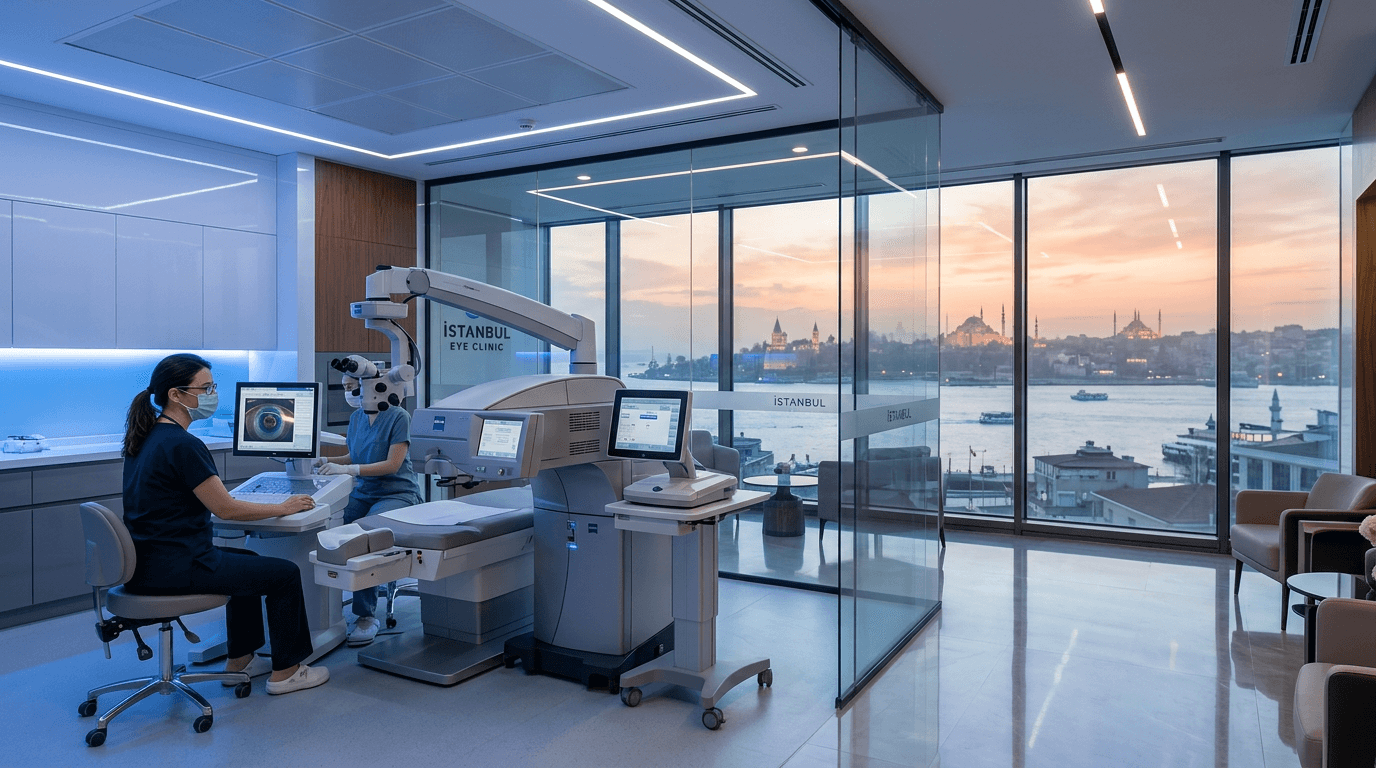
No-Touch Laser Eye Surgery Turkey: Procedure & Prices FAQ
Find answers to common questions about No-Touch Laser Eye Surgery in Turkey. Learn about TransPRK costs, recovery, and top clinics in Istanbul for vision.
Here is a comprehensive FAQ page for "No-Touch Laser Eye Surgery in Turkey," optimized for SEO and featured snippets.
Introduction
Considering no-touch laser eye surgery in Turkey is a significant decision that combines a life-changing medical procedure with international travel. Patients often have hundreds of questions about the safety, cost, recovery, and logistics involved. This FAQ is designed to answer every critical question you have, providing medically accurate, transparent information to help you make an informed choice. We address common fears about the safety of eye surgery in Turkey and break down the real costs and recovery timelines.
General Questions
What is no-touch laser eye surgery (TransPRK)?
No-touch laser eye surgery, clinically known as Transepithelial Photorefractive Keratectomy (TransPRK), is a surface laser treatment that corrects vision without any blades, suction rings, or cutting of the cornea. Unlike LASIK, it does not create a corneal flap. The laser removes the outer epithelial layer and reshapes the cornea in a single, continuous step. This makes it ideal for patients with thin corneas, active lifestyles, or those who are hesitant about flap-based procedures.
How is TransPRK different from LASIK and SMILE?
TransPRK is fundamentally different because it is a "flapless" procedure. LASIK involves creating a flap in the cornea, while SMILE creates a small pocket. TransPRK removes the surface epithelium, which then regenerates naturally. The main advantage of TransPRK is the elimination of flap-related complications (e.g., flap dislocation from eye rubbing). The trade-off is a slightly longer recovery period for vision clarity compared to LASIK. For a detailed comparison, see our guide on the difference between LASIK and PRK.
Who is a good candidate for no-touch laser eye surgery in Turkey?
Good candidates are adults over 21 with stable vision for at least one year. Ideal candidates have mild to moderate myopia (up to -8.0 diopters), astigmatism (up to -5.0 diopters), and hyperopia (up to +4.0 diopters). You must have a corneal thickness sufficient for surface ablation. It is also suitable for patients with dry eye syndrome or thin corneas who are not candidates for LASIK. A comprehensive pre-operative screening is mandatory to confirm eligibility.
Can I have no-touch laser surgery if I have astigmatism?
Yes, TransPRK is highly effective for correcting astigmatism. The excimer laser is programmed to reshape the cornea asymmetrically to correct both spherical error (myopia/hyperopia) and cylindrical error (astigmatism) simultaneously. Many patients in Turkey choose TransPRK specifically for complex astigmatism cases because the laser's eye-tracking technology can compensate for subtle eye movements during the procedure.
Is no-touch laser surgery permanent?
Yes, the physical correction of the cornea is permanent. The laser reshapes the corneal tissue, and this shape does not change over time. However, it does not prevent age-related vision changes like presbyopia (reading glasses needed after 40) or cataracts. You will likely need reading glasses in your 40s, but your distance vision should remain corrected for life. A small percentage of patients may experience regression (slight return of myopia) years later, which can be corrected with an enhancement.
Cost & Financial Questions
How much does no-touch laser eye surgery cost in Turkey?
The average cost for no-touch laser eye surgery (TransPRK) in Turkey ranges from €1,200 to €2,500 per eye. This is significantly lower than in the US (€3,000-€5,000 per eye) or UK (€2,500-€4,000 per eye). The price is often all-inclusive, covering pre-op tests, the surgery itself, post-op medications, and follow-up appointments. For a full breakdown of laser eye surgery Turkey costs, see our dedicated guide.
Is no-touch laser in Turkey cheaper than in the USA or UK?
Yes, it is typically 60-80% cheaper in Turkey. The lower cost is due to lower overheads, favorable exchange rates, and a highly competitive medical tourism market. A TransPRK procedure costing €1,800 per eye in Istanbul would cost around €4,500 per eye in the US. Even after factoring in flights, accommodation, and a 10-day stay, the total savings can be €3,000-€5,000 per patient.
What is included in the "all-inclusive" package price?
A standard all-inclusive package for no-touch laser in Turkey usually includes:
- VIP airport transfer (arrival and departure)
- 4-5 star hotel accommodation (5-7 nights)
- Comprehensive pre-operative tests (topography, pachymetry, wavefront)
- The surgery itself (per eye)
- Post-operative medications (antibiotic and steroid eye drops)
- All follow-up examinations (day 1, day 3, and sometimes day 7)
- 24/7 patient coordinator support
- English-speaking medical staff
Are there any hidden costs I should know about?
While most packages are comprehensive, potential extra costs can include:
- Flight tickets (usually not included)
- Additional hotel nights if recovery is slower than expected
- Enhancement surgery (some clinics offer free enhancements within 1 year, others charge 50% of the original cost)
- Specialist consultation for complex cases (e.g., keratoconus suspicion)
- Prescription sunglasses (recommended for the first few weeks) Always request a detailed invoice before booking.
Can I get financing or payment plans for surgery in Turkey?
Most Turkish clinics require full payment upfront, usually by bank transfer, credit card, or cash upon arrival. Some clinics offer installment plans via credit card (e.g., 6-12 months interest-free) if you use a Turkish bank card. International patients typically pay the full package price before the procedure. It is advisable to check with your clinic about their specific payment policy.
Procedure & Medical Questions
How long does the no-touch laser surgery take?
The actual laser application time is extremely short, typically 20-40 seconds per eye. The entire procedure, from entering the operating room to leaving, takes about 15-20 minutes per eye. The preparation (numbing drops, positioning) takes longer than the laser itself. You are awake throughout, and the laser is guided by a computer.
Is no-touch laser eye surgery painful?
No, the surgery itself is painless. Numbing eye drops are applied before the procedure, so you feel no pain during the laser ablation. After the surgery, when the numbing drops wear off, you will experience significant discomfort for 24-48 hours. This includes a gritty, sandy sensation, light sensitivity, and tearing. This is normal as the epithelial layer heals. Strong pain relief and lubricating drops are prescribed to manage this.
What are the risks and side effects of TransPRK?
Common side effects include dry eyes, light sensitivity, and blurred vision during the first week. More serious but rare risks include:
- Corneal haze (cloudiness) – more common in high corrections but treatable with steroid drops.
- Infection (rare, <0.1% with proper hygiene).
- Under/over-correction (may require enhancement).
- Ectasia (corneal weakening) – extremely rare with proper screening. Your surgeon will discuss these risks during your consultation.
How accurate is the laser? Can it track eye movements?
Yes, modern excimer lasers used in Turkey have high-speed eye trackers that track your eye movements up to 1,000 times per second. If you move your eye, the laser adjusts its position instantly. This ensures the ablation is perfectly centered on your pupil. The laser also has a "flying spot" technology that creates a smooth, even surface.
What happens if I blink or sneeze during surgery?
You cannot blink because a lid speculum (a gentle clip) holds your eyelids open. You are also given a mild sedative to relax. If you sneeze or cough, the laser is programmed to pause instantly. The eye tracker will also compensate for any sudden head movement. The procedure is very safe and designed to handle unexpected movements.
Will I need to stop wearing contact lenses before surgery?
Yes, this is mandatory. Contact lenses alter the shape of your cornea. You must stop wearing:
- Soft lenses: 1-2 weeks before your pre-op exam.
- Toric (astigmatism) lenses: 2-3 weeks before.
- Rigid gas permeable (RGP) lenses: 4-6 weeks before. Failure to do so can lead to inaccurate measurements and poor results. Your clinic will give you specific instructions.
Travel & Logistics Questions
Do I need a visa for medical treatment in Turkey?
It depends on your nationality. Citizens of many countries (UK, USA, Canada, Australia, most EU nations) can enter Turkey visa-free for up to 90 days for tourism or medical treatment. Others may need an e-Visa (available online, very easy). Check the Turkish Ministry of Foreign Affairs website for your specific country. You do not need a special "medical visa."
How long should I stay in Turkey for no-touch laser surgery?
You should plan to stay for a minimum of 7-10 days. The first 3-4 days are the most uncomfortable and require rest. You will have follow-up exams on Day 1 and Day 3-4. By Day 7, your vision should be significantly clearer, allowing you to travel home safely. Some clinics recommend a 10-day stay for high corrections.
Which city in Turkey is best for no-touch laser surgery?
Istanbul is the most popular city due to its concentration of world-class hospitals, international airport, and medical tourism infrastructure. Ankara and Antalya also have excellent clinics. Istanbul offers the widest choice of surgeons and the best logistics for international patients. Most clinics are located in the city center or near the airport.
Can I travel alone for this surgery?
Yes, many patients travel alone. However, it is strongly recommended to bring a companion. The first 48 hours post-op are difficult (blurred vision, light sensitivity, discomfort). A companion can help you navigate the hotel, get food, attend follow-ups, and provide emotional support. If you go alone, you must be prepared to stay in your hotel room for 2-3 days.
Is it safe to fly to Turkey for medical treatment?
Yes, it is very safe. Turkey has a robust medical tourism industry with strict regulations for licensed clinics. Most reputable clinics are accredited by the Turkish Ministry of Health (JCI or equivalent). Choose a clinic with transparent pricing, positive patient reviews, and a dedicated patient coordinator. The risk is not in the travel itself but in choosing an unverified clinic.
Recovery & Aftercare Questions
What is the recovery timeline for no-touch laser surgery?
The recovery is gradual:
- Day 0-1: Significant discomfort, blurred vision, tearing. You must rest with eyes closed.
- Day 2-4: The epithelial layer heals. Vision improves but is still hazy. Discomfort decreases.
- Day 5-7: Vision becomes clearer (60-80%). You can return to light activities.
- Week 2-4: Vision stabilizes further. You can drive at night (with caution).
- Month 1-3: Final vision result is achieved. Dry eyes improve. For a detailed day-by-day plan, see our eye surgery recovery timeline.
Can I fly home immediately after surgery?
No, you cannot fly home the same day. You must wait until your Day 1 follow-up to ensure the cornea is healing correctly. Most patients fly home on Day 3 or Day 4 post-op. You will need to wear sunglasses on the plane and use lubricating drops frequently due to dry cabin air. The pressure change is not harmful to the cornea.
What follow-up care is needed after I return home?
Your Turkish clinic will provide a detailed post-op care plan and a supply of eye drops. You will need to see a local ophthalmologist for a follow-up at 1 month, 3 months, and 6 months post-op. Many Turkish clinics have partnerships with international clinics for remote monitoring. You will also have a video consultation with your Turkish surgeon at these intervals.
How long before I can shower or wash my face?
You must avoid getting water in your eyes for the first 7 days. You can shower but keep your eyes closed and avoid direct water contact. Use a washcloth to clean your face. You can wash your hair by leaning back in the shower. After Day 7, you can gently wash your face, but avoid rubbing your eyes for at least 2 weeks.
When can I return to work or exercise?
- Desk work: You can return to work after 3-5 days, but you will need to take frequent breaks to rest your eyes.
- Driving: You can drive during the day after 5-7 days, but night driving should wait until 2-3 weeks.
- Exercise: Light exercise (walking) after 1 week. Strenuous exercise (running, gym) after 2 weeks. Swimming and contact sports (e.g., football) after 4-6 weeks.
Choosing a Clinic Questions
How do I choose a reliable clinic in Turkey?
Choose a clinic that is JCI-accredited or Turkish Ministry of Health approved. Look for:
- Surgeon experience: How many TransPRK procedures have they performed?
- Technology: Do they use modern excimer lasers (e.g., Schwind Amaris, Alcon Wavelight)?
- Transparency: Do they provide a clear, itemized quote?
- Patient reviews: Look for independent reviews on platforms like Trustpilot or Google.
- Communication: Do they respond to your questions quickly and clearly?
What certifications should I look for in a clinic?
Key certifications include:
- JCI (Joint Commission International): The gold standard for international patient safety.
- ISO 9001: Quality management system.
- Turkish Ministry of Health License: Mandatory for all clinics.
- ESCRS (European Society of Cataract and Refractive Surgeons) membership: Indicates the surgeon is up-to-date with European standards.
Is it safe to get no-touch laser surgery in Turkey?
Yes, it is very safe when you choose a reputable clinic. The complication rates for TransPRK in Turkish clinics are comparable to those in the US and Europe (less than 1% for serious complications). The key is to do your research. Avoid clinics that offer prices significantly lower than the market average (e.g., under €800 per eye) as this may indicate outdated technology or lack of aftercare.
What questions should I ask my surgeon during the consultation?
Ask these specific questions:
- "How many TransPRK procedures have you personally performed?"
- "What type of laser do you use? Is it a Schwind Amaris or Alcon Wavelight?"
- "What is your enhancement policy? Is it free or at a reduced cost?"
- "What is your rate of corneal haze and how do you treat it?"
- "Can you provide me with the contact details of three previous patients?" A confident surgeon will answer these openly.
Conclusion
No-touch laser eye surgery (TransPRK) in Turkey offers a safe, effective, and highly affordable path to clear vision for suitable candidates. By choosing a JCI-accredited clinic with an experienced surgeon, you can achieve excellent results while saving thousands of euros compared to your home country. The key is thorough research, realistic expectations about recovery, and strict adherence to post-operative care.
Ready to take the next step? Get a Free Quote from our verified clinics or Browse Verified Clinics to compare packages and surgeon profiles. Your journey to clear vision starts here.
Related Guides

Ready to Start Your Medical Journey?
Get free personalized quotes from Turkey's top clinics.
Get Free Quote